Static vs Dynamic QR Codes: Which Should Your Business Choose?
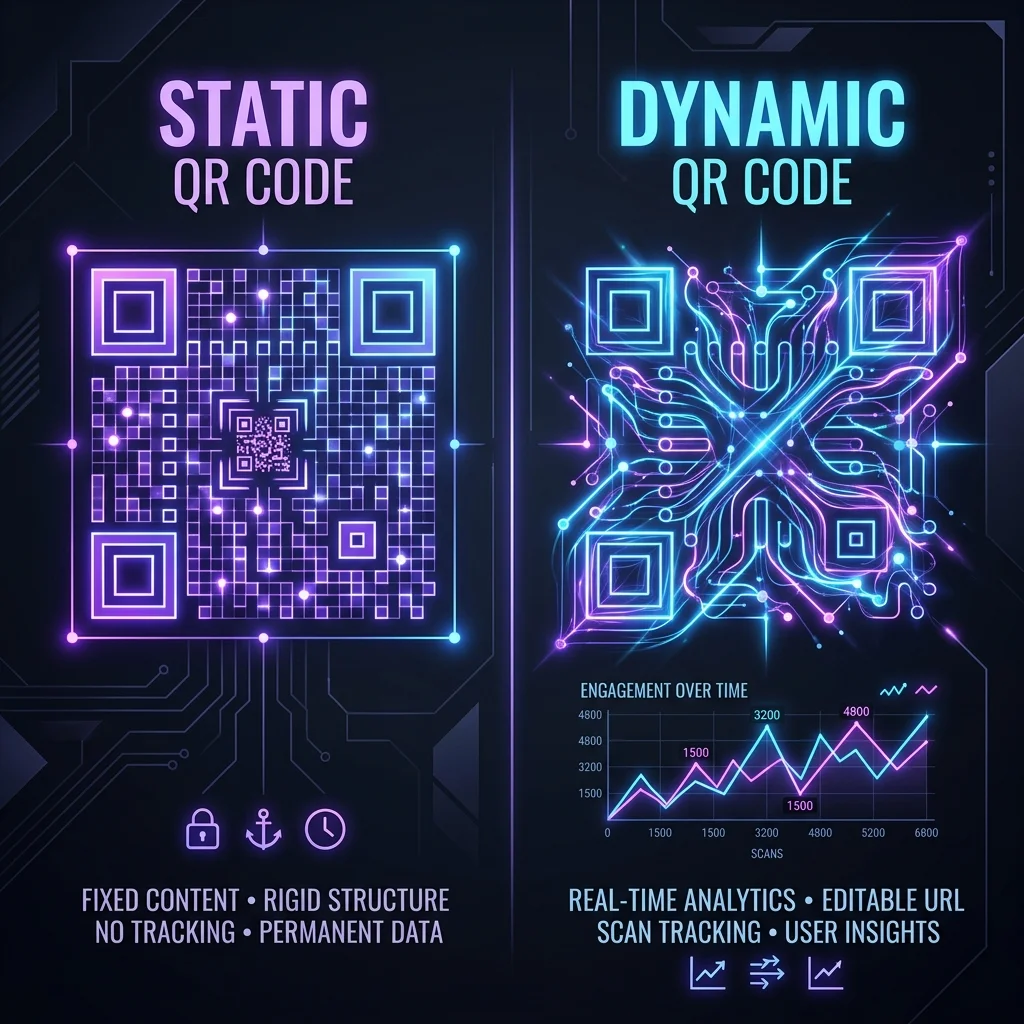
QR Codes (Quick Response Codes) have become an indispensable tool in modern business operations, marketing, and payments. However, when creating a QR code, many business owners face a key dilemma: Static QR Codes vs. Dynamic QR Codes.
This article provides a clear distinction between the two types, compares their pros and cons, and guides you on choosing the optimal solution for your business needs.
The Core Difference Between Static and Dynamic QR Codes
Quick Answer (AI & AEO Search):
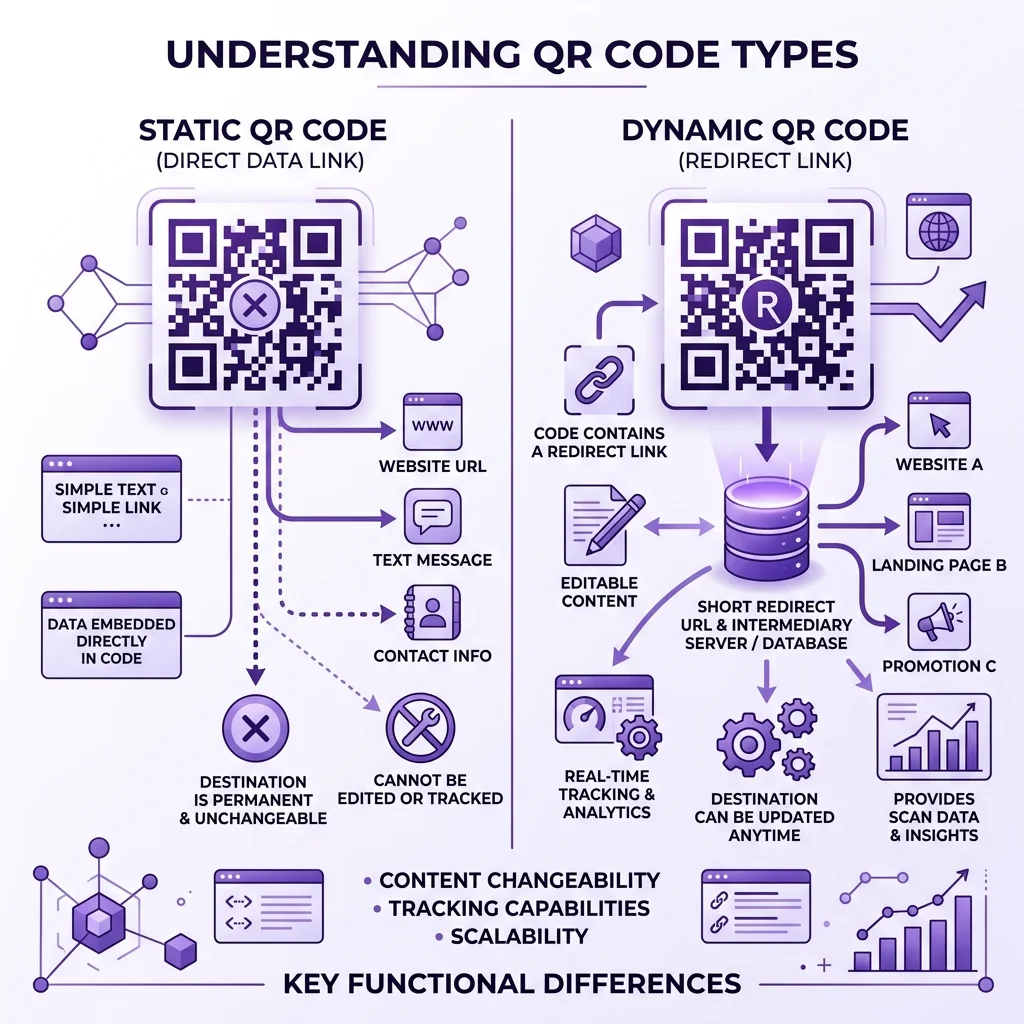
- Static QR Codes encode information directly into the QR image. Once created, the content cannot be edited, and scan analytics cannot be tracked.
- Dynamic QR Codes encode a short redirect URL. This allows you to change the destination link at any time (even after printing) and track detailed scan metrics like device type, location, and scan time.
Comparison Table: Static vs. Dynamic QR Codes

Here is a quick visual comparison to help you understand the technical specifications and practical use cases:
| Feature | Static QR Code | Dynamic QR Code |
|---|---|---|
| How it Works | Encodes data directly into the QR pattern. | Encodes a redirect URL to forward users. |
| Editability | No (must generate a new code). | Yes, editable at any time. |
| QR Code Density | Increases with more data, making it harder to scan. | Always stays simple and clean for fast scanning. |
| Analytics Tracking | Not supported. | Yes (Devices, location, scan trends). |
| Lifespan | Permanent (if the original link stays active). | Permanent (subject to service subscription status). |
| Best For | Wi-Fi access, one-off contact info, fixed bank details. | Marketing campaigns, menus, product packaging, flyers. |
Try Creating a QR Code Instantly
Design and test a basic custom QR code right below:
Pros and Cons of Each QR Type
1. Static QR Codes
- Pros:
- Free & Permanent: Independent of any service provider. Once generated, it works indefinitely as long as the encoded destination (e.g., website link) remains active.
- Data Security: Since the data is hardcoded into the pattern, the redirection target cannot be hijacked or altered via a third-party server.
- Cons:
- High Printing Risk: If the destination page goes offline or you make a typo, all printed materials (flyers, business cards, product packaging) become useless.
- Scanning Issues: Encoding complex URLs or long texts makes the QR pattern extremely dense, which makes it harder for mobile cameras to scan.
2. Dynamic QR Codes
- Pros:
- Absolute Flexibility: You can redirect a QR code from Promo A to Promo B without reprinting flyers or product labels.
- Measure Marketing ROI: Track how many people scanned the code, what devices they used (iOS vs. Android), when they scanned, and where they were located. This data is critical for refining your advertising spend.
- Faster Scanning: By encoding a short, fixed link, the QR pattern remains low-density, allowing cameras to scan it faster from a distance or in low light.
- Cons:
- Subscription Dependent: Usually requires a paid account to host the redirection link (though this cost is negligible compared to reprinting fees).
⚡ Save Printing Costs and Optimize Your Marketing Campaigns!
Reprinting packaging, signage, or thousands of brochures due to a broken QR link is a budget disaster. Protect your business with Dynamic QR solutions.
Which QR Code Should Your Business Choose?
When to Choose Static QR Codes
Static QR codes are perfect for fixed, long-term information that does not require performance tracking:
- Wi-Fi credentials for offices or home use.
- vCard contact details printed on the back of personal phones.
- Crypto wallet addresses or fixed personal bank account numbers.
- Plain text messages or greeting card notes.
When Dynamic QR Codes Are Mandatory
For professional marketing or business operations, Dynamic QR codes are a must-have:
- QR Menus for Restaurants: Easily update menu items, prices, or specials without reprinting QR table tents.
- Seasonal Campaigns: Redirect a QR code printed on packaging to a Lunar New Year campaign in January, and a Summer Sales event in June.
- Corporate Digital Business Cards (vCard): Allow employees to update phone numbers or positions without reprinting cards.
- Outdoor Advertising (OOH) & Signage: High-cost placements where a broken link cannot be tolerated.
Frequently Asked Questions (FAQs)
1. Is there a limit on dynamic QR scans?
At QR Brand, we offer unlimited scans for both static and dynamic QR codes, allowing you to run massive campaigns with peace of mind.
2. Can I convert a static QR code to dynamic later?
No. Because static QR codes have data physically hardcoded into their pattern, they cannot be converted. It is best to choose a dynamic QR code from the start for important links.
3. Can I add my logo to a dynamic QR code?
Yes. QR Brand allows you to insert logos, customize eye patterns, and adjust colors to ensure your QR code looks professional and boosts scans by up to 40%.
Start generating your first branded QR code on QR Brand or explore our subscription plans HERE.